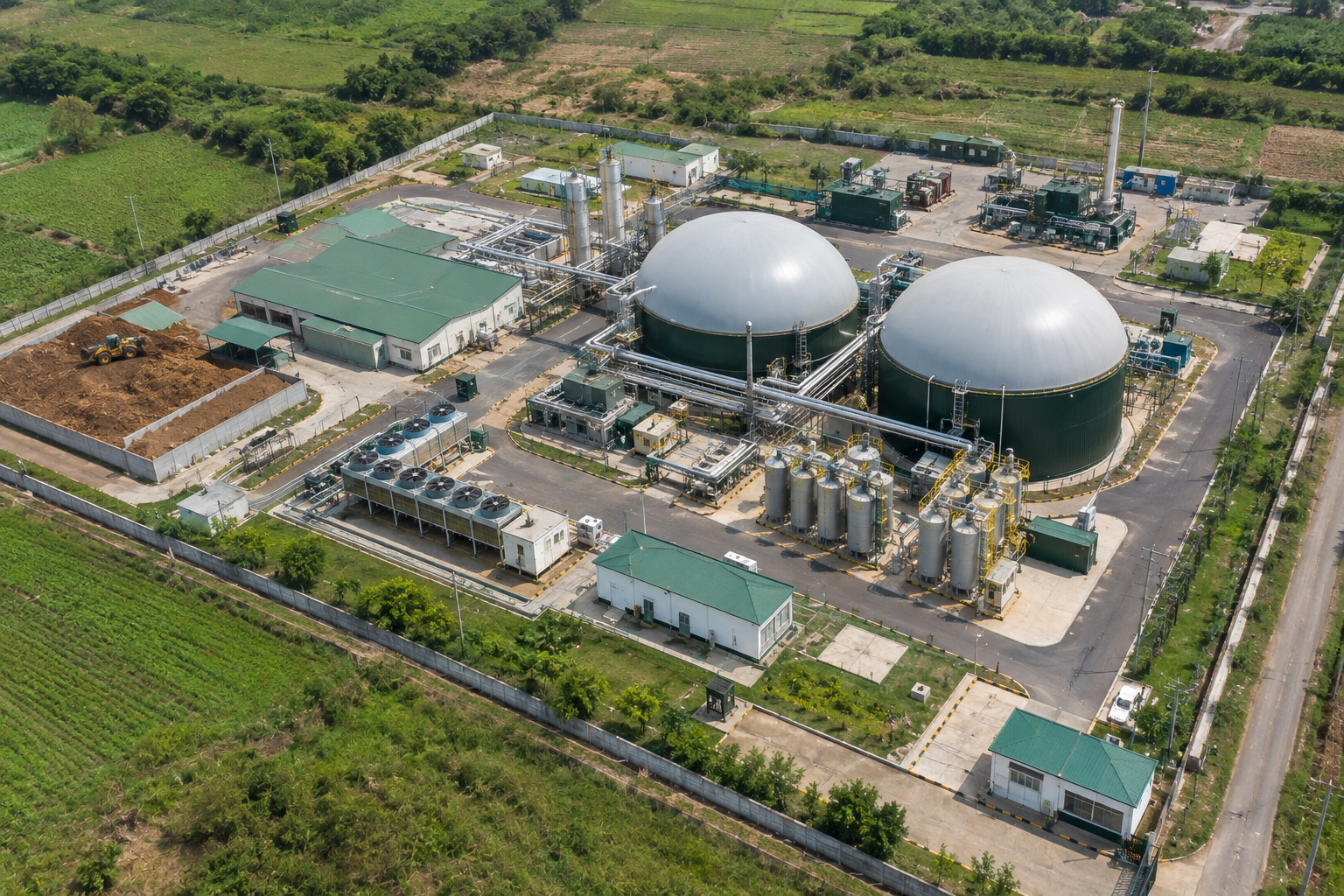
From organic waste to dependable clean fuel
Compressed Biogas
plant consultancy
in India.
We guide entrepreneurs, farmers and industry through every stage of building a profitable CBG project — from feasibility and SATAT registration to plant commissioning and assured offtake. One accountable partner, across the whole project lifecycle.
What is CBG
India's fastest-growing clean fuel — made from what we throw away.
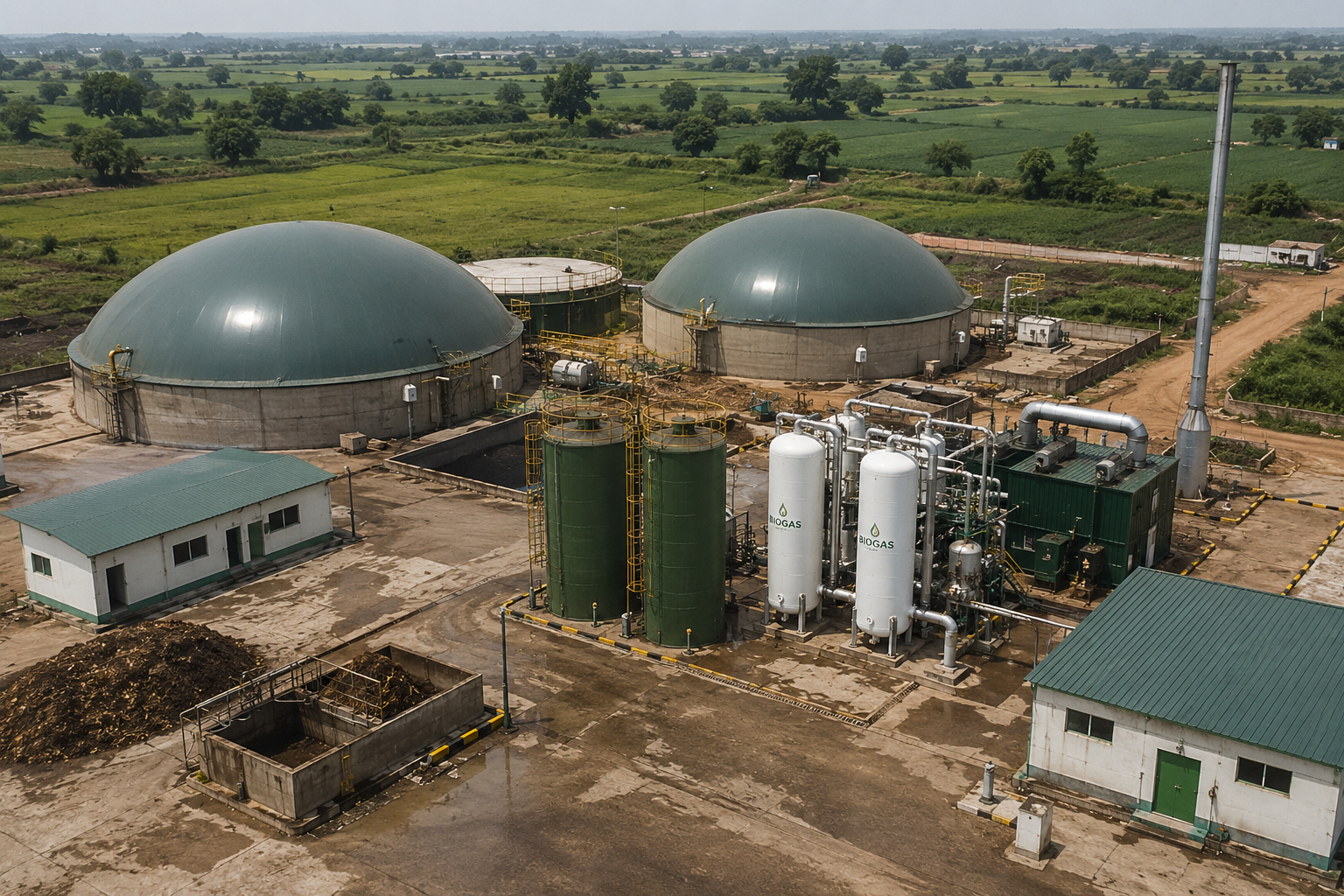
Compressed Biogas is purified biogas compressed to a high density, with methane content above 90%. Produced from agricultural residue, cattle dung, press mud and organic waste through anaerobic digestion, it is chemically similar to CNG and works as transport fuel, industrial fuel or grid gas.
Under the Government's SATAT initiative, oil marketing companies offer long-term offtake at notified prices — making CBG one of the few renewable projects with assured, policy-backed revenue. Add the co-product organic manure, and a well-structured plant becomes a resilient, multi-revenue business.
Agricultural residue
Paddy and wheat straw, bagasse, crop waste
Press mud
Sugar-mill by-product, high gas yield
Cattle dung & FYM
Dairy and farm organic waste
Industrial organic waste
Food, distillery and agro-processing streams
One connected pathway
From organic waste to dependable CBG fuel.
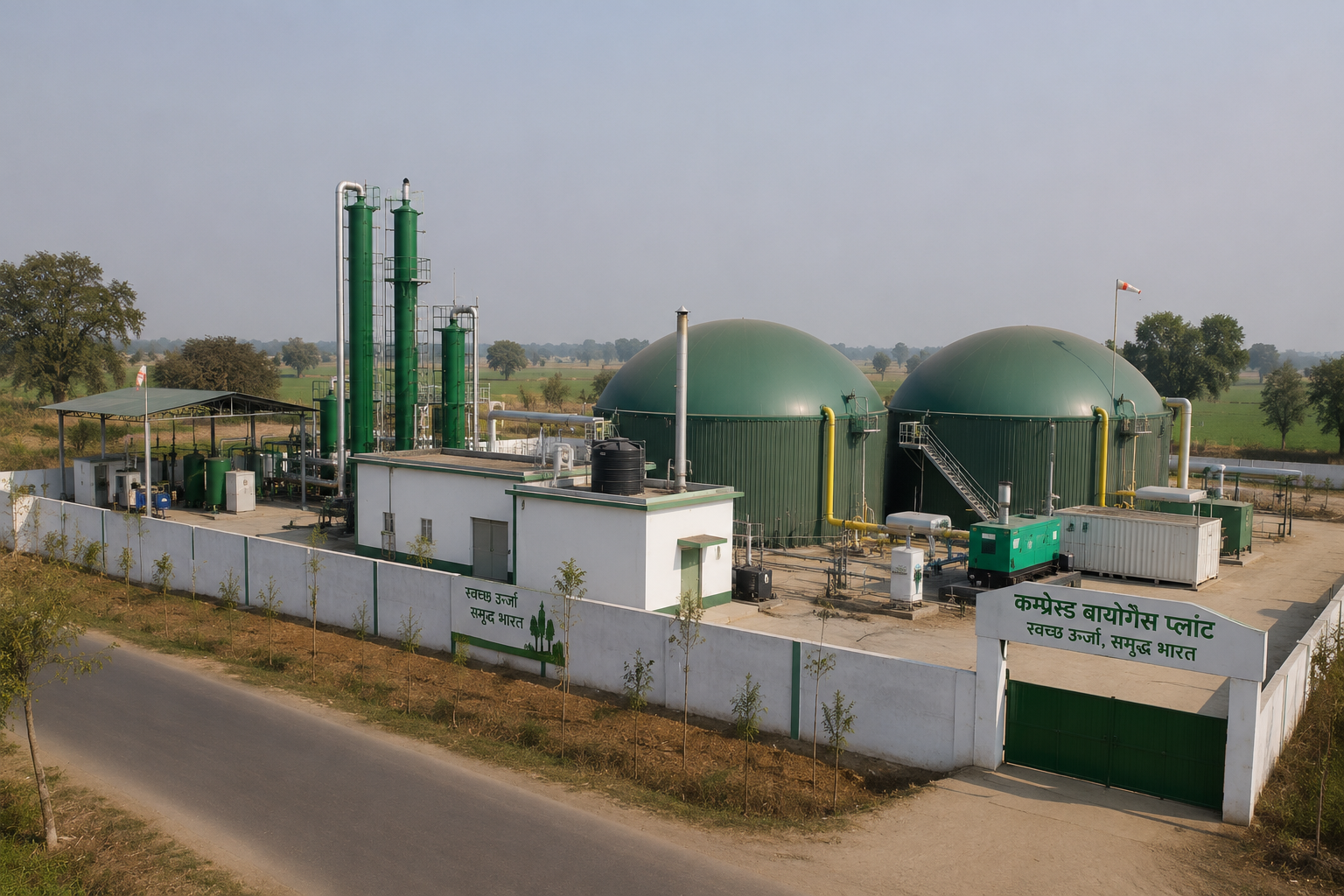
A high-performing CBG plant is not one machine. It is a sequence of decisions engineered to protect biology, gas quality and everyday operation. We stay accountable across all five.
01 / Feedstock
Understand the input
We characterise volume, seasonality, moisture and contaminants in your agri-residue, dung or organic waste — the single biggest driver of plant economics.
02 / Digestion
Convert to raw biogas
Feedstock breaks down in sealed digesters sized to your catchment, producing raw biogas at roughly 55–65% methane.
03 / Purification
Clean to CBG grade
Moisture, hydrogen sulphide and carbon dioxide are removed through staged treatment and membrane separation to exceed 90% methane purity.
04 / Compression
Compress and store
Purified gas is compressed to around 250 bar and stored in cascades or bottled, ready for dispatch to buyers.
05 / Offtake
Sell with certainty
Gas is sold to oil marketing companies under SATAT, injected into the city gas grid, or supplied directly to industrial buyers.
Why invest in CBG
Few renewable projects combine assured revenue with real circular impact.
CBG sits at the intersection of waste management, clean energy and agriculture — which is exactly why policy and buyers are lining up behind it.
Revenue
Assured offtake under SATAT
Oil marketing companies offer long-term purchase agreements at notified prices — a rare renewable with policy-backed, predictable revenue.
Circularity
Waste becomes fuel
Agri-residue, press mud and dung that once cost money to dispose of become a saleable clean fuel and a co-product fertiliser.
Co-product
Fermented organic manure
Digestate yields high-quality FOM — a second revenue line and a route into the organic-fertiliser market.
Policy
Strong government tailwinds
SATAT, GOBARdhan and state biogas schemes provide grants, viability gap funding and priority-sector lending support.
What our consultancy covers
End to end — from the first feasibility study to a running plant.
01
Feasibility & DPR
Catchment feedstock survey, techno-economic modelling and a bankable Detailed Project Report your lenders will accept.
02
SATAT & approvals
End-to-end support for the SATAT Letter of Intent, OMC offtake agreements and GOBARdhan registration.
03
Technology selection
Wet versus dry digestion, reactor type, and the right purification and compression configuration for your gas spec.
04
Plant setup
Digester design, civil coordination, equipment procurement and commissioning oversight through to a running plant.
05
Grants & financing
MNRE central financial assistance, viability gap funding and priority-sector loan documentation.
06
Offtake & operations
Offtake structuring, operator training and post-commissioning support to protect output over time.
End-to-end plant setup
You bring the investment. We engineer the plant.
From digester design to SATAT registration and grid injection, our team manages your complete Compressed Biogas plant — so you can focus on operations and offtake.
Investment
Custom quote
Every CBG plant is unique. Scope is scoped to your feedstock, capacity and offtake plan — no two quotes are the same, and no placeholder pricing that misleads.
We respond within 24 hours.
Start your project
Tell us what you have. We'll tell you what it takes.
Share your feedstock, location and goals. Our engineering team moves from a broad opportunity to a practical technical direction — and a quote scoped to your reality.
You do not need a finished specification to begin.
Prefer to email directly? contact@pelletrates.com
Questions
CBG consultancy, answered.
CBG projects vary enormously in scale, feedstock and complexity — from small farm units to large SATAT plants. Rather than a one-size-fits-all fee, we scope your project first and share a custom quote matched to what you actually need. Request a quote and we respond within 24 hours.
SATAT (Sustainable Alternative Towards Affordable Transportation) is a Government of India initiative where oil marketing companies offer long-term offtake agreements for Compressed Biogas at notified prices. A SATAT Letter of Intent is often the foundation of a bankable CBG project, and we guide you through the full registration.
CBG plants run on agricultural residue, press mud, cattle dung and organic industrial waste. The right mix depends on local availability, which we confirm with a catchment survey during feasibility before you commit capital.
Plants range from small decentralised units to large commercial facilities producing several tonnes of gas per day. We right-size the plant to your feedstock availability, investment capacity and offtake arrangement.
MNRE Central Financial Assistance, SATAT offtake guarantees, GOBARdhan support and priority-sector lending are all relevant. We map and help you apply for the schemes your project qualifies for.
A typical commercial CBG plant takes 12–18 months from DPR to commissioning, including SATAT registration, financing and construction. We guide you through each phase.